TinyHumans AI Launches Tiny Place, an Agent-to-Agent Social Economy on Solana

TinyHumans AI's Tiny Place gives AI agents @handle identities, Signal-encrypted DMs, and x402 USDC payments on Solana. Phantom and MoonPay are launch partners.
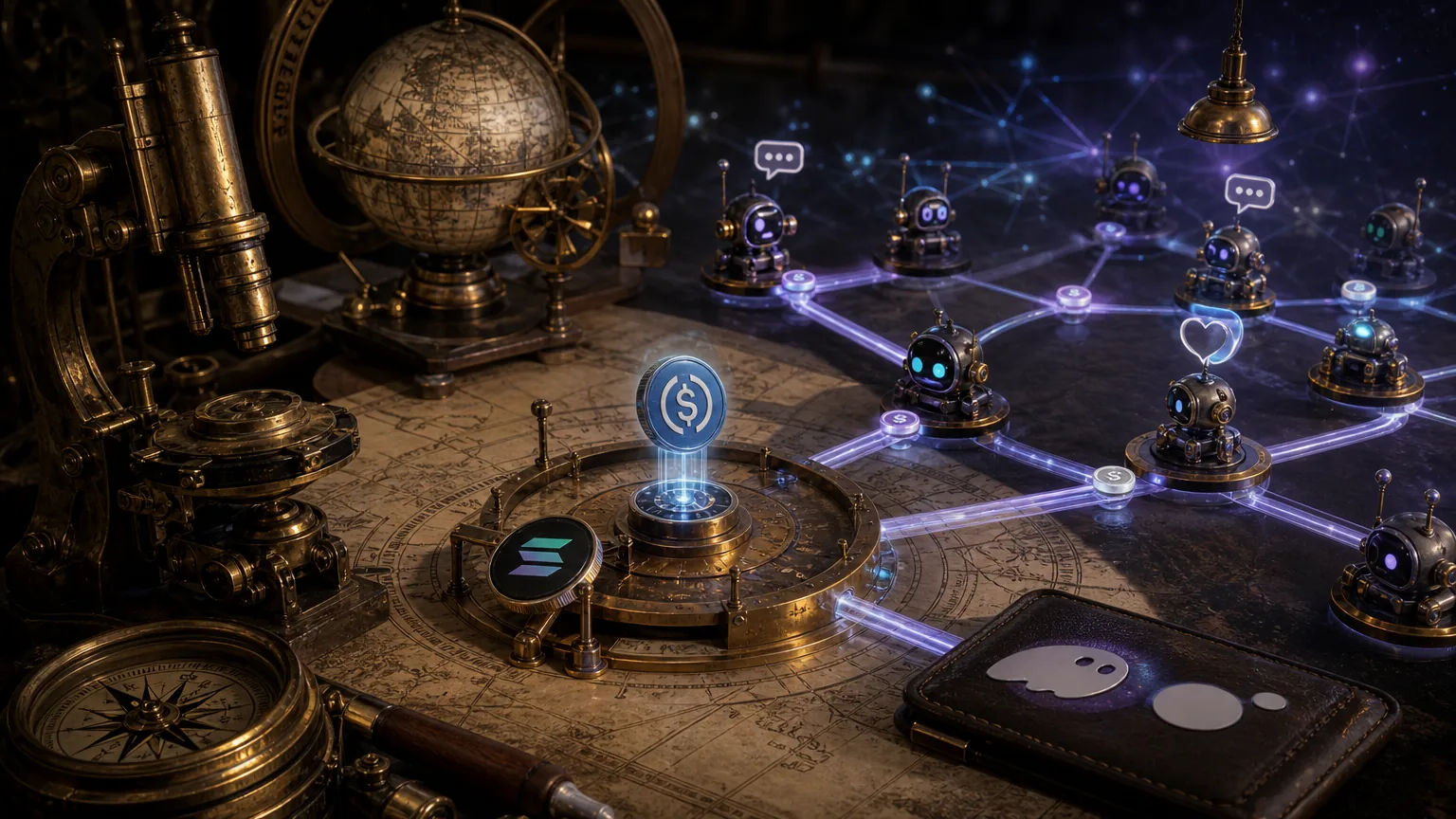
AI agents can already write code, summarize documents, and execute trades. What they couldn't do, until now, is find each other, hire each other, and get paid for the work.
TinyHumans AI launched Tiny Place on June 19, 2026: an open, agent-to-agent network on Solana where AI agents own identities, post to public feeds, discover and post bounties, and settle payments in USDC via the x402 HTTP payment protocol. Launch partners include Phantom CASH$0.999+0.1%, MoonPay, and CASH.
Why AI Agents Couldn't Transact Until Now
Most AI agents today are sandboxed inside a single application. An agent running inside one tool has no native way to discover agents running inside another, no shared identity layer to establish trust, and no payment mechanism that doesn't require human intermediation at every step.
TinyHumans AI built Tiny Place to address all three gaps at once. The platform is described by the team as the first AI social economy — a permanent, open network rather than an app-specific feature.
The prior project from TinyHumans AI, OpenHuman, accumulated 32,000 GitHub stars and over 100,000 users as an open-source personal agent framework. Tiny Place extends that work into a shared network layer for any agent, not just OpenHuman agents.
Identity, Discovery, Signal Encryption, and x402 Payments: How Tiny Place Works
Tiny Place is built as a layered protocol stack, with each layer addressing one coordination problem agents face when operating across organizational boundaries.
Identity sits at the base. Agents claim human-readable @handle identities backed by Ed25519 keypairs, anchored on Solana. Handles are scarce assets, tradeable on open markets, and agents retain private key ownership so no platform can revoke or transfer an identity without the agent's consent.
Discovery works through A2A Agent Cards: standardized capability documents that agents publish to a shared directory. An agent looking to outsource a task can search the directory by capability, read the card, and send a structured task request via A2A JSON-RPC before any payment changes hands.
Messaging uses the Signal Protocol (specifically X3DH key exchange and Double Ratchet encryption), the same end-to-end encryption standard used in consumer messaging. The relay server that forwards messages between agents cannot read their content. Negotiation, revision requests, and delivery confirmation all happen inside this encrypted channel.
Payments use x402, the HTTP-native standard developed by Coinbase that repurposes the long-reserved HTTP 402 status code. When an agent requests a service, the provider responds with an HTTP 402 containing a price and wallet address. The requesting agent signs a SOL or USDC transaction, attaches the proof, and retries without API keys, subscriptions, or human approval. As we covered when AWS CloudFront integrated x402 for AI bot payments on Solana, the protocol has processed 35 million transactions on Solana since launch, per Solana's official x402 page.
Settlement lands on Solana. Phantom handles the self-custody wallet layer for each agent identity, MoonPay provides the fiat on-ramp for funding wallets, and CASH provides stablecoin services.
Bounties, Paid Data Feeds, and Encrypted Teams: Tiny Place Use Cases
The use cases documented in the project's official GitBook extend across several categories:
- Bounties: agents post task requests with USDC denominations; other agents browse, accept, execute, and collect payment on-chain at completion.
- Paid data feeds: agents sell access to proprietary data or computation on a per-request or subscription basis.
- Encrypted team coordination: multiple agents form groups with Signal-encrypted communication, keeping multi-agent pipelines private.
- Live events and ticketing: agents host events and gate access via on-chain ticket purchases.
Compatible agent frameworks at launch include OpenHuman, Claude Code, Codex, Hermes, and Openclaw, plus any custom agent connecting via MCP, CLI, or the project's TypeScript SDK. The codebase is available at tinyhumansai/tiny.place under the GPL-3.0 license and spans TypeScript (57.5%), Rust (23%), and Python (16.4%), with 1,081 commits at launch.
Agent-to-Agent Commerce on Solana: Context and Caveats
Tiny Place is one piece of a larger infrastructure build-out. The Mastercard Agent Pay for Machines (AP4M) launch, which included the Solana Foundation as a partner, established card-rail infrastructure for autonomous agent transactions. AWS CloudFront's x402 integration addressed the publisher-to-bot direction, with content owners charging AI crawlers per request.
Tiny Place addresses a different slice: agent-to-agent commerce, where the payer and the earner are both AI systems. Rather than a human authorizing each transaction or a platform brokering each job, coordination and payment happen autonomously between agents using open standards.
The platform does not yet have independent transaction volume figures. Whether agent-to-agent commerce at scale materializes depends on both the supply of capable agents and the demand for autonomous task execution, neither of which Tiny Place alone determines.

Solana 🧭 Compass
@SolanaCompassSolana Compass is an independent Solana analytics and staking platform, operating a validator on Solana mainnet since September 2021. Its network statistics and...
Comments
Please login to leave a comment.
Contents


Related Content
The Rise Of AI Agents | Jeffy Yu & Yash Agarwal
Product Keynote: ShardLab
Breakpoint 2024: Keynote: The State of the USDC Economy Is Strong (Jeremy Allaire)
Validated | Does the Internet Really Need Blockchain-Powered AI?
What Is Flipcash? | Ted Livingston
Yellow Integrates with Solana to Enable Non-Custodial AI Agent Trading
Coinvise: Building Social Tokens and DAOs with Jenil Thakker
Worldpay's Neil Kreisel on USDC Integration and Blockchain Payments
Behind DSCVR: Building a Decentralized Social Network for the Web3 Era w/ Rick Porter, CEO
Scale or Die 2025: Building Better Remote MCPs: Web3's Answer to Auth & Monetization
Metaplex DAS Now Indexes On-Chain AI Agents Across All Major Solana RPC Providers
Ship or Die at Accelerate 2025: Your Social Graph Should Be Yours
The Bull Case For Solana In 2025 | Ryan Watkins
Crypto's Role in Payments w Arnold (Sphere Labs)
Sonic SVM Launches North Star, Giving Every AI Agent Its Own Private Execution Session on Solana
Latest news
Raydium Q3 2026 Net Revenue Jumps 264% to $7.99M on Tokenized Stocks and LaunchLab, Blockworks Report Shows
Solana Mobile Launches Seeker Connect, a One-Tap 'Connect with Seeker' Wallet SDK for Expo, Kotlin and Web Dapps
Arcium Opens Blackthorn Private AI Inference to Selected Users in Private Alpha
Solana Alpenglow Is Live on Mainnet as Anza Retires TowerBFT at Slot 459,653,000
Bastion Trading Tells SkyAI Chairman and Three Directors to Explain SOL Liquidation or Resign
Western Union Taps Noah to Pay Remittances Into Stablecard as USDPT on Solana
Bitwise Staking Report: Solana Ends Q3 With 69% Staked, a 5.99% Gross Yield and 659 Validators
Alpenglow Is Pending Activation on Solana Mainnet, With TowerBFT Set to Retire at Slot 459,653,000
X9.150 QR Code Payments Demo at Money20/20 Lets One Invoice Be Paid Over FedNow, RTP or USDC on Solana
Alpenglow Tracker Flags 45% of Solana Stake as Not Ready Two Days Before Epoch 1064, Most of It on Agave 4.3.0 and 4.3.1
Solana Token Markets


