Solflare Launches Bridge: Permanent Cross-Chain Deposit Addresses via NEAR Intents

Solflare Bridge gives users permanent deposit addresses across Bitcoin, Ethereum, and six other chains, routing assets to Solana through Aurora Intents.
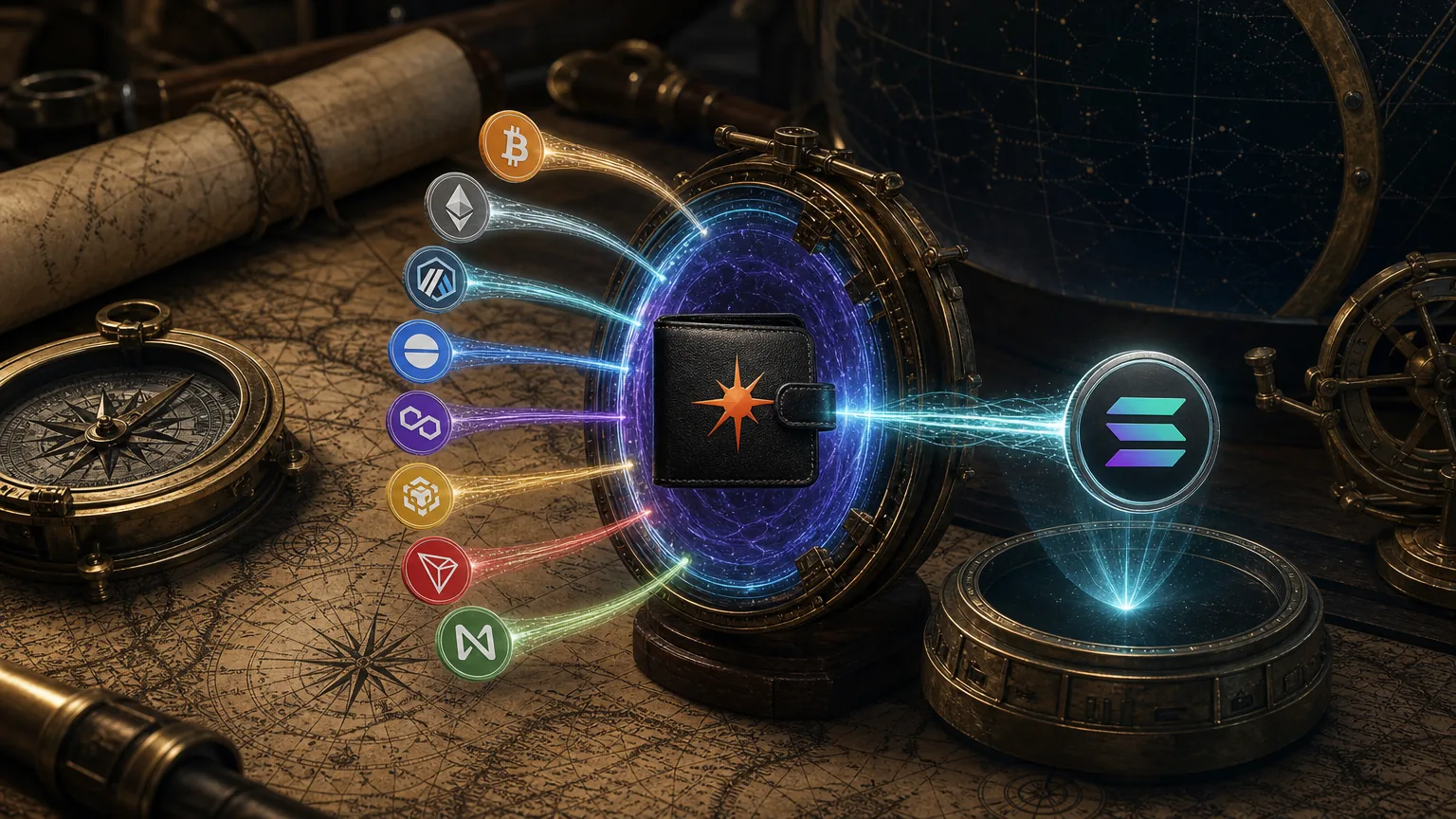
Solflare launched Bridge on July 29, 2026, adding a permanent cross-chain deposit feature to its self-custodial Solana wallet. The feature gives users a fixed address for each source chain and token pair, reusable indefinitely without connecting to an external application each time.
Bridge is available across Solflare's mobile app, web platform, and browser extension. It is built on Aurora Intents, a cross-chain execution system developed by Aurora Labs on top of NEAR Intents. NEAR Protocol's official account confirmed the integration at launch: "Solflare Bridge, a new feature inside the wallet, lets users deposit assets from major chains and receive Solana assets directly, no extra wallet or dApp connection needed. Built on Aurora Intents, with NEAR Intents powering the routing."
How Solflare Bridge Creates and Uses Deposit Addresses
Each source-chain-and-token combination gets its own permanent address. A user wanting to move ETH from Ethereum receives one address for that pair; bridging USDT on Tron gets a separate address for that combination. Both addresses stay valid and reusable after the initial setup.
The mechanics match a centralized exchange deposit flow rather than a conventional bridge. Users copy the assigned address and send from their source wallet. Aurora Intents handles routing, liquidity, and conversion in the background. No approval transaction is required on the Solana side. Users receive SOL or stablecoins directly in Solflare, with additional output tokens available based on liquidity at settlement.
In an interview with CCN, Aurora Labs CEO Declan Hannon described the design rationale:
Supported Chains and Output Assets at Launch
Eight source chains are supported: Bitcoin, Ethereum, Arbitrum, Base, Polygon, BNB Chain, Tron, and NEAR. The full set of supported chain-address formats is in the NEAR Intents chain documentation.
Output on the Solana side defaults to SOL or stablecoins, with additional tokens available subject to liquidity at settlement time.
Settlement Timing and Fee Structure
EVM transfers settle in under one minute; Bitcoin deposits take approximately 14 minutes, per Aurora Labs. Solflare charges 0.1% on stablecoin transfers and 1% on all other assets, according to Crypto Briefing. All deposits are free for the first 30 days, subject to a combined cap of $125,000 in waived fees. Solflare sets the customer-facing rate; Aurora Intents controls the execution guarantee underneath.
How Intent Settlement Differs from a Lock-and-Mint Bridge
Standard bridge designs lock an asset on the source chain and mint a synthetic on the destination, leaving users exposed to the trust assumptions of the locking contract. Solflare Bridge settles through a different model.
Each transfer is submitted as a signed intent containing binding conditions: a minimum output amount, a maximum fee, and a deadline. Multiple solvers compete to fill the same intent. A solver that cannot deliver the committed minimum output cannot settle the transfer; the intent fails rather than delivering a worse rate. Settlement clears through the NEAR Intents contract, not a locking mechanism.
NEAR Intents has processed more than $23 billion in total volume since launch and now handles over $2.3 billion monthly, according to Aurora Labs. Aurora Labs built its cross-chain execution layer on top of that settlement infrastructure, which makes the intent guarantee possible without a bridge trust layer.

Solana 🧭 Compass
@SolanaCompassSolana Compass is an independent Solana analytics and staking platform, operating a validator on Solana mainnet since September 2021. Its network statistics and...
Comments
Please login to leave a comment.
Contents

Projects

Related Content
Building the first wallet on Solana (feat. Vidor, founder of Solflare) - Solfate Podcast #39
Solana in the Multi-Chain World by NEAR Intents: NEAR Protocol
How To Unlock Cross Chain Liquidity | Sergej Kunz
Solflare Unveils 'Magic': AI-Powered Wallet That Understands Natural Language
Is Bitcoin Still Relevant In a Smart Contract World? w/ Matt Luongo (Thesis)
Turning BTC into a Programmable Asset on Solana w/ Justin Wang (Zeus Network)
Breakpoint 2024: Product Keynote: Mantis: Powering Best Execution (Omar Zaki)
Why put #bitcoin on #solana with tBTC? (feat. Matt Luongo, Threshold Network) - Solfate Podcast #40
Solflare Launches Merchant Cashback, Earning USDC at Nike, Best Buy, and 4,000+
Xverse: Decoding Bitcoin's Evolution and Bitcoin NFTs
Owning a Bitcoin Football Club w/ Peter McCormack of What Bitcoin Did | Ep. 16
Product Keynote: Solflare
How Kamino Became Solana's Largest Lending Protocol | Marius Ciubotariu
Why build on Solana? (w/ Vidor from Solflare Wallet)
NEAR Launches Confidential SOL Yield on Kamino via Gauntlet Vault as NEAR Token Lists on Solana Through Sunrise
Latest news
Solana Policy Institute Asks SEC to Define 'Permissionless' Ledgers by Who Controls Validators
Circle Gateway Brings Unified EURC Balances to Solana, With 20M EURC in a New Pre-Mint Account
Sanctum Q3 2026 Report: TVL Hits a Record 18.62M SOL as Gross Profit Falls 16% in SOL Terms
Bitquery Traces $1.4B of Raydium CLMM Volume, 22.7% of the Total, to One Wash-Trading Wallet
J.P. Morgan Asset Management Brings Its MONY and JLTXX Tokenized Money Market Funds to Solana
Decrypt Picks Jupiter to Power Trading in Its Money Accounts on Solana
Solana Company (HSDT) Named a Hong Kong Strategic Enterprise, Plans Solana Validators in the City
Kamino Says Its AUTO Market Passed $170M a Month After Fixed-Rate Borrowing Launched
Raydium Q3 2026 Net Revenue Jumps 264% to $7.99M on Tokenized Stocks and LaunchLab, Blockworks Report Shows
Solana Mobile Launches Seeker Connect, a One-Tap 'Connect with Seeker' Wallet SDK for Expo, Kotlin and Web Dapps
Solana Token Markets


