Baillie Gifford Launches BAGEY, the First UK-Regulated Tokenized Bond Fund, Natively on Solana and Ethereum

Baillie Gifford's BAGEY is the first UK-regulated, natively tokenized bond fund on any public blockchain, now live on Solana and Ethereum with BNY custody.
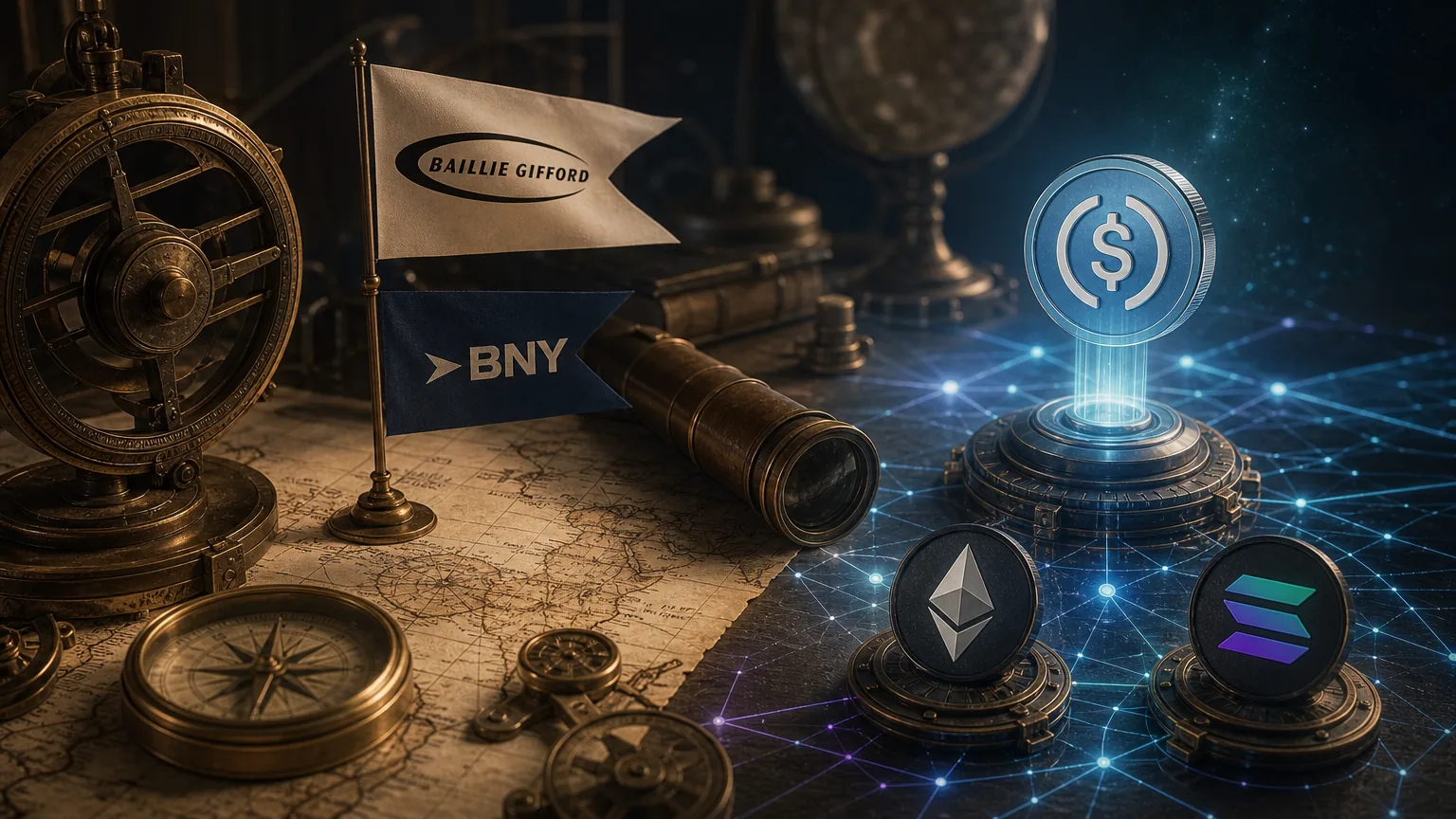
Baillie Gifford, the 117-year-old Edinburgh-based investment firm managing $237 billion in assets, launched the Baillie Gifford Enhanced Yield Fund (BAGEY) on June 22, 2026 as the first publicly available, fully UK-regulated tokenized bond fund to issue natively on a public blockchain. The fund runs on both Ethereum and Solana, with BNY (Bank of New York Mellon) providing tokenization and digital wallet infrastructure and NatWest Trustee and Depositary Services acting as depositary.
The launch marks a first for Solana: no UK FCA-regulated fund has previously issued natively on the network.
Native On-Chain Issuance, Not a Wrapper Token
Most tokenized fund products work by placing a wrapper token on top of a separately maintained fund, meaning the blockchain token and the legal ownership record live on different systems and must be kept in sync.
BAGEY is constructed differently. Theo Golden, Head of Digital Assets and Tokenization at Baillie Gifford, described the structure to CoinDesk: "The Baillie Gifford Enhanced Yield Fund is not a token placed on top of a fund. It is a fund issued onchain, with the blockchain serving as the register of record. Investors hold the fund directly: direct ownership, direct recourse."
The Ethereum and Solana blockchains are the legal source of truth for ownership. When a token moves on-chain, the ownership transfer is simultaneous and authoritative, with no downstream reconciliation against a separate register.
LedgerInsights reported that Baillie Gifford only agreed to proceed with a native issuance structure, declining wrapper-based alternatives.
BAGEY Fund Terms: 7% Yield, Daily Dealing, $100 Minimum
BAGEY is an actively managed short-duration corporate bond fund, targeting a portfolio of investment-grade public corporate bonds with two-year duration and BBB average credit quality. The fund is structured as a UK-regulated Open-Ended Investment Company (OEIC) and is authorised by the Financial Conduct Authority.
Both Baillie Gifford and BNY were added to the FCA's registered crypto companies list at launch, grounding the fund's blockchain operations within the UK's existing regulated framework rather than carving out an exemption.
Settlement is in USDC (USDC), issued by Circle USDC$1.000+0.0%, or in traditional fiat currency. Using USDC for subscriptions and redemptions removes the T+2 settlement lag of traditional fund processing; positions clear at blockchain speed.
The fund is available to eligible professional investors in the UK, Switzerland, and the Cayman Islands. Baillie Gifford has managed dedicated bond strategies for more than 25 years.
BNY's Role and the Infrastructure Layer
BNY brings its custody and tokenization infrastructure to the fund. Katey Neate, BNY's Global Head of Investor Solutions, told CoinDesk: "Tokenisation has moved from concept to real-world application, and this launch shows how regulated fund structures can evolve to meet the needs of a more digital, connected marketplace."
In a separate statement, Neate added: "This will be a global blueprint for shaping how traditional financial assets can be issued, serviced and accessed through blockchain-enabled infrastructure."
BNY's involvement extends beyond credentialling. As one of the world's largest custodian banks, BNY supplies the institutional plumbing (wallet management, transaction processing, regulatory reporting) that fund managers and institutional investors require before allocating capital to a blockchain-native structure. The combination of BNY infrastructure and FCA authorisation means BAGEY can be accessed by institutional investors who face regulatory constraints on holding unregulated or custodially uncertain crypto assets.
Stuart Dunbar, a Partner at Baillie Gifford, described the firm's long-term view: "Tokenisation is not a short-term theme for us, but an integral evolution in how financial products may be built, distributed and used over time."
Solana as a Co-Equal Issuance Chain for FCA-Regulated Funds
Baillie Gifford's choice to issue on Solana alongside Ethereum is notable. Ethereum has been the default chain for institutional tokenized fund issuance: BlackRock's BUIDL fund, Franklin Templeton's BENJI, and the majority of tokenized treasuries started or remain exclusively on Ethereum. A UK-regulated fund choosing Solana as a co-equal issuance chain is a different kind of institutional validation than a DeFi project or stablecoin deployment.
Solana passed Ethereum to become the leading blockchain by RWA holder count on June 18, reaching 285,971 RWA-holding wallets per RWA.xyz. BAGEY adds institutional depth to that holder base: a regulated, custodied, income-generating instrument targeting professional allocators rather than retail-facing speculative tokens.
Baillie Gifford had been signalling its Solana commitment publicly. At Breakpoint 2025, the firm's product keynote argued that traditional finance should build on Solana's architecture rather than wait. BAGEY is the execution of that position.
A Note on Copycat Tokens
One practical note for any investor researching BAGEY: an unaffiliated actor minted a memecoin using the same $BAGEY ticker on Solana, trading at fractions of a cent with no connection to Baillie Gifford, BNY, or the Enhanced Yield Fund. Investors should confirm they are engaging with the official fund through BNY's verified onboarding channels rather than through a secondary market token search.
Expanding Solana's Institutional Fixed Income Stack
BAGEY enters a Solana fixed-income landscape that has added significant institutional infrastructure over recent months. Centrifuge brought $200 million in AAA-rated CLO collateral to Solana in June as backing for Ethena USDe$1.000+0.0%'s USDe (USDe). Moody's Token Integration Engine went live on Solana mainnet in June via AlphaLedger, embedding machine-readable credit ratings directly in tokenized bond instruments. The combination of credit rating infrastructure, custodian-backed fund issuance, and USDC settlement positions Solana as a viable venue for fixed-income products that need both throughput and regulatory credibility.
Baillie Gifford's framing throughout has been client-outcome focused rather than technology-focused. Golden's test (whether tokenisation improves the outcome for the client without weakening the proposition) is a tighter filter than most institutional blockchain pilots apply. The answer here, from the firm's perspective, is that native issuance eliminates the register synchronisation risk that makes wrapper tokens an imperfect solution for a daily-dealt fund, while USDC settlement cuts the friction that T+2 processing adds to short-duration bond strategies.
Whether BAGEY attracts significant AUM will depend on how quickly eligible professional investors in the three available jurisdictions engage with on-chain fund subscriptions. The terms ($100 minimum, daily dealing, around 7% yield, BBB quality) are designed to be accessible by institutional standards. The remaining question is appetite.

Solana 🧭 Compass
@SolanaCompassSolana Compass is an independent Solana analytics and staking platform, operating a validator on Solana mainnet since September 2021. Its network statistics and...
Comments
Please login to leave a comment.
Contents


Related Content
BNY Launches Digital Transfer Agency on Blockchain with Baillie Gifford's BAGEY
BitGo Adds Institutional Custody and T+0 Settlement for USDM1, the World's First Natively Issued Onchain Sovereign Bond
Product Keynote: Baillie Gifford
Centrifuge Brings New York Life's Tokenized High-Yield Bond Fund HYB to Solana
Product Keynote: Baillie Gifford
Spiko Brings SAFO, Europe's Largest Tokenized Money Market Fund, to Solana
Ethereum Merge Explained in 10 Minutes | Superteam Clips
Can ETH Outperform SOL In 2025?
The Ethereum Merge Explained | Superteam Clips
Is This DeFi's Breakout Moment? | Michael Sonnenshein
Standard Chartered: The Bull Case For Solana | Geoff Kendrick
How To Make Ethereum Great Again | Emmanuel Awosika (Ethereum R&D)
Launching Crypto's Largest Tokenized Fund On Solana | Michael Sonnenshein
Why Does the Mexican Government Want to Tokenize Its Treasuries? w/ David Taylor (Etherfuse)
Validated | The Philosophy of Ethereum According to Bankless' David Hoffman
Latest news
Solana Policy Institute Asks SEC to Define 'Permissionless' Ledgers by Who Controls Validators
Circle Gateway Brings Unified EURC Balances to Solana, With 20M EURC in a New Pre-Mint Account
Sanctum Q3 2026 Report: TVL Hits a Record 18.62M SOL as Gross Profit Falls 16% in SOL Terms
Bitquery Traces $1.4B of Raydium CLMM Volume, 22.7% of the Total, to One Wash-Trading Wallet
J.P. Morgan Asset Management Brings Its MONY and JLTXX Tokenized Money Market Funds to Solana
Decrypt Picks Jupiter to Power Trading in Its Money Accounts on Solana
Solana Company (HSDT) Named a Hong Kong Strategic Enterprise, Plans Solana Validators in the City
Kamino Says Its AUTO Market Passed $170M a Month After Fixed-Rate Borrowing Launched
Raydium Q3 2026 Net Revenue Jumps 264% to $7.99M on Tokenized Stocks and LaunchLab, Blockworks Report Shows
Solana Mobile Launches Seeker Connect, a One-Tap 'Connect with Seeker' Wallet SDK for Expo, Kotlin and Web Dapps
Solana Token Markets


