
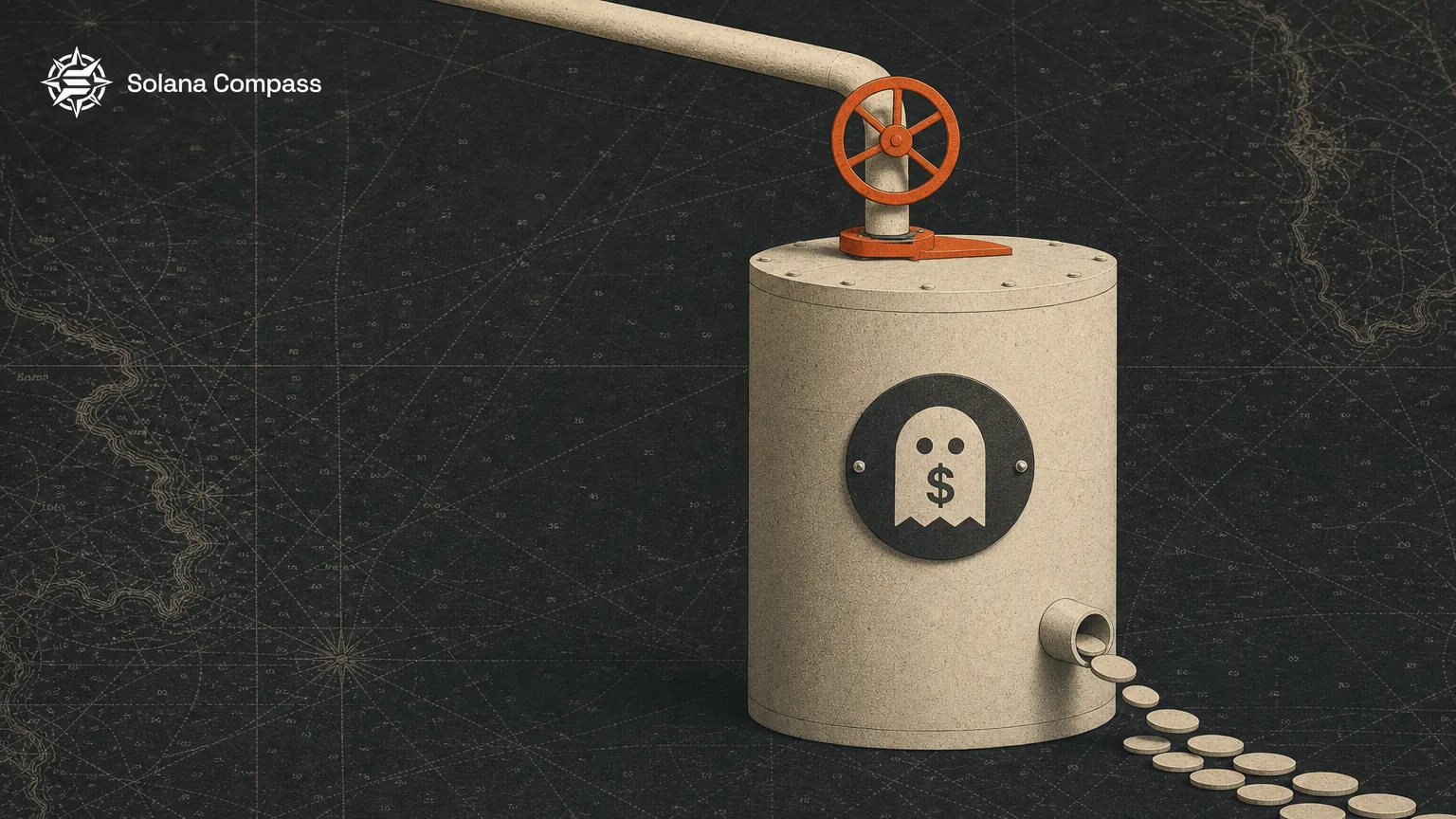
Privacy Cash, a privacy protocol that launched on Solana, has paused new deposits. The move follows blockchain analytics firm Elliptic tracing about $1.2 million of Binance hack proceeds into its pools. Withdrawals stay open while the team tightens the wallet screening meant to keep stolen funds out.
"In light of the recent Binance hack, we want to make sure bad actors can't use our product," Privacy Cash wrote in its announcement on X on 4 November 2026. The post gave no date for deposits to resume.
What the Privacy Cash deposit pause means for users
The Privacy Cash pause stops new money entering the protocol's pools without locking anyone out. "Withdrawals will remain available," the team wrote, so users who already hold shielded funds can still move them to any address. "During the pause, we'll continue strengthening our wallet screening system," the 4 November post said, adding: "Stay tuned for updates on when the service will resume."
Answering a user who suggested keeping deposits shut until the hacker is found, the Privacy Cash account replied: "We will make our screening system more robust. To be fair, Binance paused withdrawals for a few days."
Privacy Cash's announcement cites the Binance hack in general terms. The figures on how much hack money reached its pools come from Elliptic's tracing of the stolen funds.
How much Binance hack money Elliptic traced into Privacy Cash
Elliptic follows the stolen funds in a live analysis of the laundering, last updated at 09:15 UTC on 4 November. On 3 November, Elliptic says, about 41 ETH and 9,600 SOL, "together worth about $1 million," were deposited into Privacy Cash from addresses linked to the theft. In its 4 November update, Elliptic reports that about 2,300 SOL more went in. Its running total: "Since November 3 about $1.2 million in ETH and SOL has been deposited into the Privacy Cash privacy pool." crypto.news reported the same breakdown from Elliptic.
That is a small slice of the haul. Elliptic estimates that $6.43 billion in crypto was stolen from Binance on 29 October 2026, against Binance's own estimate of about $6.3 billion. On 31 October the FBI attributed the theft to TraderTraitor, its name for a North Korean state-sponsored hacking group, according to Elliptic. By our arithmetic, the Privacy Cash deposits equal roughly 0.02% of Elliptic's estimate.
The hack had already reached Solana DeFi through depositor behaviour within a day: as we covered on 30 October, Jupiter Lend withdrawals queued in a liquidity crunch while Kamino paused SOL/BTC borrowing.
How the Privacy Cash shielded pool works on Solana
Privacy Cash is a shielded pool, a shared on-chain account that breaks the visible link between the wallet that pays in and the wallet that takes out. According to the project's GitHub repository, a deposit of SOL creates a commitment that is added to a Merkle tree, a compact cryptographic record of every deposit. A withdrawal to any address is made with a zero-knowledge proof, which shows the withdrawer owns one of those deposits without revealing which one. The repository lists security reviews by Accretion, HashCloak, Zigtur and Kriko.
Elliptic describes Privacy Cash as a protocol in the style of Tornado Cash, the Ethereum mixing service, that launched on Solana in August 2025, backed by the crypto accelerator Alliance DAO, and calls it "a privacy pool that runs on Ethereum and Solana." The protocol "describes itself as compliance-focused, and says it uses on-chain risk screening to block bad actors," Elliptic writes, adding that on Ethereum an administrator wallet can pause or upgrade its contracts.
The pause works on the way in. Shutting deposits keeps any further traced funds out of the pools while the screening is reworked, and the exit stays open for everyone already inside, much like a bank branch that stops taking deposits but keeps its cash machines running.
Privacy versus screening for Solana privacy tools
Privacy Cash ended its 4 November announcement with "Privacy is for everyone, but not for criminals," after saying its goal was "to make privacy tools for everyday people, not to enable crime." Replies to the post split between users asking where else to go while deposits are shut and others arguing that any screening makes a privacy tool permissioned.
For Solana users, the open questions are practical. The things to watch are when Privacy Cash reopens deposits, what its strengthened wallet screening checks, and whether Elliptic's live tracker records any further hack-linked flows into the pools.


