Helium Network Ends Redondo Beach Pier's Years-Long Connectivity Dead Zone

Talus Communications activated Helium Network coverage at Redondo Beach
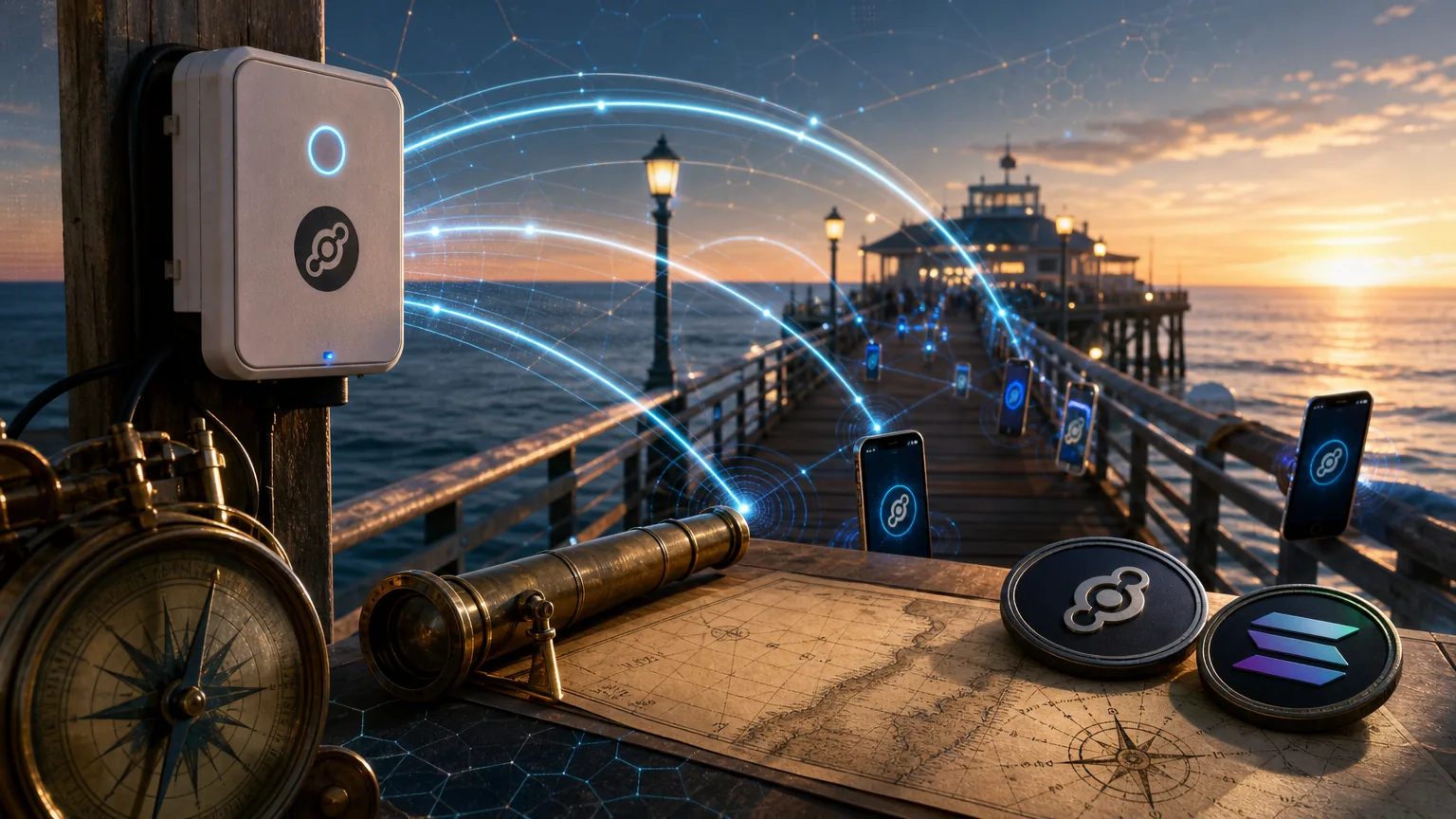
The pier at Redondo Beach, California draws more than 1 million visitors each year. For years, most of them arrived to near-zero cellular coverage, blocked by the high-rise condominiums sitting between the waterfront and the nearest carrier towers. The problem was well-known. The economics of fixing it through traditional means never penciled out.
Helium Network HNT$0.395-3.9% just changed that without deploying a single new tower.
How Carrier Offload Fixed What Carriers Would Not
Talus Communications, a Helium Network deployer, activated coverage at the pier by enabling the Helium Network on the city's existing Wi-Fi infrastructure and turning on carrier offload, a feature major US carriers use to route traffic when their towers are congested or out of reach. No new hardware was required, and the city spent nothing on capital infrastructure.
"The pier has been a connectivity blind spot," said Mike Cook, Redondo Beach IT Director, in the announcement. "We could not justify the cost. No new infrastructure, no impact on our capital budget."
Within three months, more than 2,000 users per day were connecting through the network, with numbers rising as summer foot traffic builds, per Helium. HNT (HNT) rewards flow to the deployer based on data traffic the hotspot carries, aligning the operator's incentives directly with actual usage.
"For years, the Redondo Beach pier was a dead zone," said Mario Di Dio, Helium CEO. "Helium changes that equation."
Steve Rovarino, President of Talus Communications, put it directly: "When you can walk onto a pier and watch your phone connect, that's the power of the Helium Network in action."
The Economic Case Carriers Could Not Make
The Redondo Beach situation illustrates why traditional carrier infrastructure leaves specific locations underserved. Deploying a cell tower requires significant upfront capital, permitting, and ongoing maintenance. Those costs only make sense when projected revenue justifies them, and a seasonal pier, however crowded, rarely clears that bar for a major carrier.
Helium's model inverts the incentive structure. Anyone with access to a location and an internet connection can deploy a hotspot and earn rewards from the data traffic it handles. The deployer owns the asset, captures the revenue, and bears the risk. Helium currently operates roughly 140,000 hotspots across the United States and serves more than 3 million daily connections globally, per Helium.
That scale comes from individuals identifying gaps firsthand. As Helium put it on June 23: "That's what happens when you distribute infrastructure to the people who see the gaps firsthand."
Helium's Solana Foundation
Helium migrated from its own blockchain to Solana in April 2023, making HNT an SPL token. The Helium Mobile subnetwork, which handles cellular coverage deployments like Redondo Beach, issues MOBILE (MOBILE) tokens to hotspot operators. The IoT subnetwork issues IOT (IOT) tokens for device connectivity. Both subnetworks feed into HNT's burn-and-mint design, where data credit purchases burn HNT and link token economics to actual network usage.
The Redondo Beach deployment is a single data point. As proof of what DePIN wireless infrastructure can accomplish in the gaps carriers leave behind, it is a concrete one: a high-traffic public venue, years without a fix, resolved in months by a local operator with no towers and no public funds.

Solana 🧭 Compass
@SolanaCompassSolana Compass is an independent Solana analytics and staking platform, operating a validator on Solana mainnet since September 2021. Its network statistics and...
Comments
Please login to leave a comment.
Contents


Projects

Related Content
How Helium Is Leading Crypto's DePIN Revolution | Abhay Kumar
Helium's Wireless Revolution: Can 100M Devices Go On-Chain?
Ship or Die at Accelerate 2025: Lightning Talk: Helium
Leading Solana's DePin Future | Amir Haleem
Product Keynote: Helium
Breakpoint 2023: Helium - Exploring DePIN, Helium, and Future Opportunities on Solana
Helium Moves Mobile Network Data to Apache Iceberg Tables Anyone Can Query With SQL, Switch-Over Due November 1
Breakpoint 2023: How Helium Migrated to Solana
Building Solana Economic Zones | Farhaj Mayan, Forma
Helium Opens 7-Day Vote on HIP-149, Its Biggest Governance Decision Since Moving to Solana
Helium Opens NYC Expansion Zones at MSG, Radio City, Grand Central, Javits Center, and Port Authority
Helium Says First Wakefern Grocery Stores Are Live on the Helium Network, Carrying Carrier Traffic Over Store Wi-Fi
Solana Changelog April 25 - Last Restart Slot Syscall, Helium Migration, and Developer Updates
Helium Launches HeliumOS, a Full Carrier-Enablement Platform for Connectivity Businesses
Helium Discloses 23-Hospital Health System Carrying 145 TB of Mobile Data in a Week Over Existing Wi-Fi
Latest news
Circle Gateway Brings Unified EURC Balances to Solana, With 20M EURC in a New Pre-Mint Account
Sanctum Q3 2026 Report: TVL Hits a Record 18.62M SOL as Gross Profit Falls 16% in SOL Terms
Bitquery Traces $1.4B of Raydium CLMM Volume, 22.7% of the Total, to One Wash-Trading Wallet
J.P. Morgan Asset Management Brings Its MONY and JLTXX Tokenized Money Market Funds to Solana
Decrypt Picks Jupiter to Power Trading in Its Money Accounts on Solana
Solana Company (HSDT) Named a Hong Kong Strategic Enterprise, Plans Solana Validators in the City
Kamino Says Its AUTO Market Passed $170M a Month After Fixed-Rate Borrowing Launched
Raydium Q3 2026 Net Revenue Jumps 264% to $7.99M on Tokenized Stocks and LaunchLab, Blockworks Report Shows
Solana Mobile Launches Seeker Connect, a One-Tap 'Connect with Seeker' Wallet SDK for Expo, Kotlin and Web Dapps
Arcium Opens Blackthorn Private AI Inference to Selected Users in Private Alpha
Solana Token Markets


